
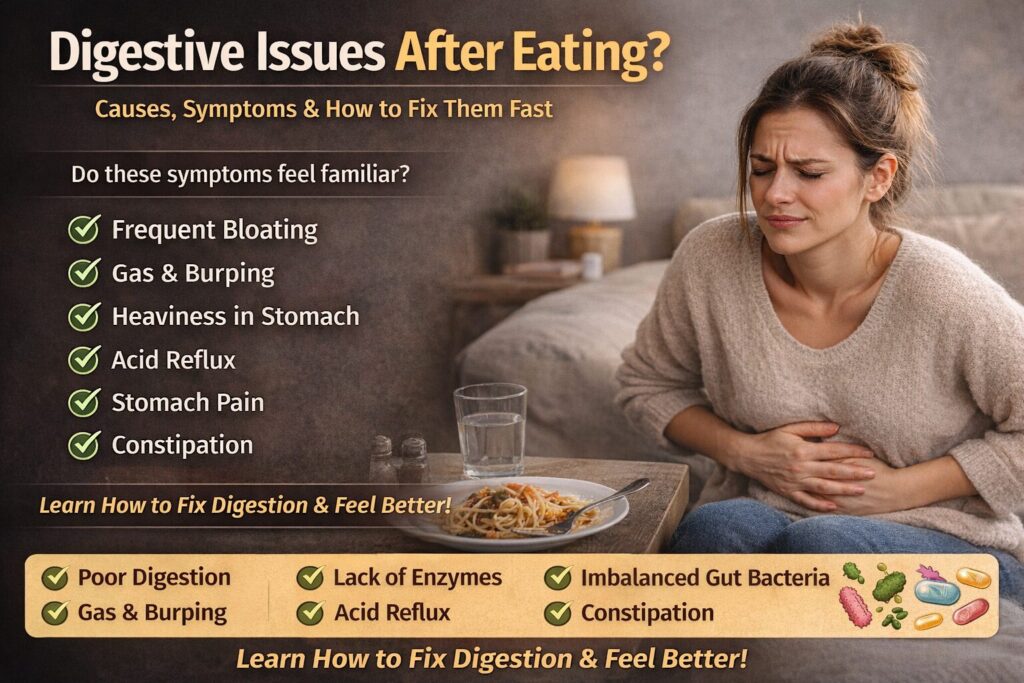
Feeling bloated, heavy, or uncomfortable after eating is not something you should ignore.
Many people finish meals expecting energy and satisfaction but instead experience:
If this happens regularly, your digestive system may not be processing food efficiently.
In many cases, recurring digestive issues after eating are connected to poor food breakdown, weak digestive enzyme activity, gut microbiome imbalance, and digestive stress.
People struggling with ongoing digestive discomfort often explore solutions like the best supplement for bloating and gas because temporary fixes rarely address the root problem.
Digestion is far more complex than simply “eating food.”
Your digestive system must:
When digestion slows down, food may remain inside the digestive system longer than normal.
This often increases:
Many people researching digestive discomfort also explore why you feel bloated after eating to better understand how fermentation and poor digestion contribute to stomach discomfort after meals.
Bloating usually happens when food ferments instead of breaking down efficiently.
This may cause:
People dealing with recurring bloating frequently research top foods that cause bloating to identify foods that place more stress on digestion.
Gas often increases when food remains partially digested.
This may happen when:
Individuals experiencing recurring gas commonly explore how to reduce gas naturally for additional digestive comfort support.
Feeling heavy after eating often suggests that digestion is struggling.
This may occur when:
Even healthy foods may feel difficult to tolerate when digestion weakens.
Poor digestive function may sometimes contribute to:
Digestive stress often becomes worse when food sits too long inside the stomach.
Slow digestion may contribute to:
People experiencing these symptoms frequently explore signs of poor gut health to better understand digestive imbalance.
Many people assume food itself is the only problem.
But the deeper issue is often digestion.
When food is not broken down properly:
This explains why some people react strongly to foods that others tolerate easily.
Digestive enzymes help your body break down:
Without enough digestive enzyme activity, food may remain partially undigested.
This often contributes to:
Many individuals searching for better digestion naturally explore a digestive enzyme supplement to help improve food breakdown and nutrient absorption.
Your digestive system contains trillions of bacteria that influence digestion and gastrointestinal wellness.
Healthy gut bacteria may help support:
When microbiome balance weakens, digestive symptoms often become more noticeable.
People researching digestive wellness frequently explore the gut microbiome in health and disease to better understand how gut bacteria influence digestion and overall wellness.
Certain foods may create more digestive stress when digestion is already weak.
Common examples include:
Many people looking for broader digestive relief also explore natural remedies for bloating to better support digestion naturally.
Several daily habits may worsen digestive discomfort over time.
These include:
Small habits repeated daily often influence digestion more than most people realize.
Digestive wellness usually improves best when multiple digestive functions are supported together.
Helpful strategies may include:
Many individuals comparing digestive support ingredients also research digestive enzymes vs probiotics to better understand how digestion support systems work differently.
This is where many people struggle.
Some rely only on probiotics.
Others eliminate foods while ignoring digestion itself.
But complete digestive wellness usually requires support for:
People looking for broader digestive support frequently explore the best supplements for gut health and digestion instead of relying on single-function digestive products.
The most effective digestive wellness approach often combines:
This broader digestive strategy may help support digestion more effectively than relying on probiotics or enzymes alone.
Many individuals researching deeper gut recovery strategies also explore how to fix gut health fast for long-term digestive wellness support.
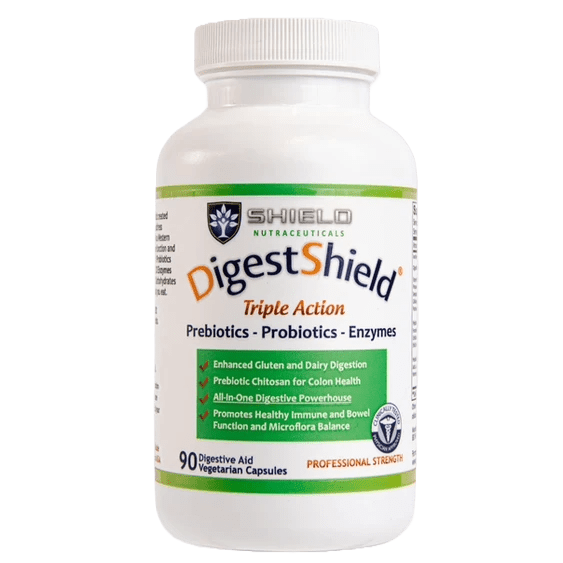
DigestShield® was designed to support digestion and gut wellness together in one advanced digestive support formula.
DigestShield® contains digestive enzymes that help support digestion after meals.
This may help support:
DigestShield® combines probiotics and prebiotics to support:
People researching microbiome support frequently compare prebiotic vs probiotic ingredients to better understand how both contribute to digestive wellness.
DigestShield® also includes mushroom-derived chitosan to help support:
This creates a more complete digestive wellness system compared to relying on only probiotics or digestive enzymes alone.
Bloating often happens when food is not being broken down efficiently, increasing fermentation and gas buildup inside the digestive tract.
Digestive heaviness may occur when digestion slows down or meals remain in the stomach longer than normal.
Yes. Gut microbiome imbalance may influence digestion, fermentation, and food tolerance.
Supporting food breakdown, hydration, gut balance, and digestive comfort together may help improve digestion naturally.
Digestive symptoms often continue when digestion, microbiome balance, and digestive stress are never fully addressed together.
If you are tired of dealing with:
your digestive system may need more complete support.
DigestShield® was designed to help support:
Explore the best gut health supplement for complete digestive support and discover how DigestShield® may help support digestion more naturally and comfortably every day.

Etiam magna arcu, ullamcorper ut pulvinar et, ornare sit amet ligula. Aliquam vitae bibendum lorem. Cras id dui lectus.
63739 street lorem ipsum City, Country
+12 (0) 345 678 9
info@company.com
Take the first step towards a happier gut. Get 5% de descuento your next purchase of DigestShield.