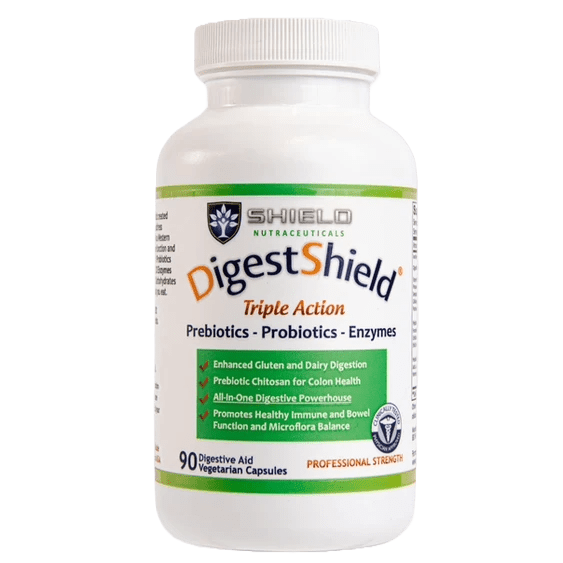
Chitosan is generally considered an indigestible dietary fiber with emerging but still mixed evidence for true “prebiotic” status in humans.
Indigestible fiber aspect
Chitosan is a deacetylated chitin derivative that resists digestion by human upper‑GI enzymes, so it behaves as a nondigestible fiber in the small intestine.
Like other fibers, it can contribute to bulking and viscosity, and some forms are fermented by colonic microbiota to short‑chain fatty acids (SCFAs).
Prebiotic criteria and current data
The standard definition of a prebiotic requires selective use by beneficial microbes that confers a health benefit to the host.
Reviews on chitin/chitosan report that chitosan and chitosan oligosaccharides can modulate microbiota composition (e.g., increasing Bacteroides–Prevotella groups, some butyrate/SCFA producers, or Akkermansia in animal studies).
Some authors and manufacturers now describe chitosan as a “prebiotic dietary fiber” because of these microbiota shifts and SCFA production, but findings are not fully consistent and some models show little change.
Practical interpretation
Functionally, chitosan behaves as an indigestible fiber and in some formulations can support probiotic viability or act as the “prebiotic” component in synbiotic systems (e.g., chitosan‑coated probiotic nanoparticles).
Evidence for chitosan as a robust, selective prebiotic (on par with inulin, FOS, GOS) in humans is still developing; it may be more accurate to say it is a nondigestible fiber with potential prebiotic effects, dependent on degree of deacetylation, molecular weight, and dose.