
Medically reviewed by a licensed gastroenterologist or registered dietitian Written by Steve | Shield Nutraceuticals | Last updated: June 2026
The best supplements for gut health and digestion are not the ones with the most compelling marketing they are the ones with the most clinical evidence behind them for your specific symptoms and situation. That distinction matters enormously, because the supplement market for gut health is saturated with products that sound credible but have little to no rigorous human trial data behind them.
This guide ranks the most important supplements for gut health and digestion by the strength of their evidence from the most clinically robust to the more targeted and emerging. For each one, you will find what it does, who it is most useful for, the evidence that supports it, and the dosage range used in clinical studies. You will also find a condition-specific section that maps specific symptoms IBS, leaky gut, bloating, post-antibiotic recovery, constipation to the supplements most likely to help.
This is not a list of products. It is a framework for making an informed decision about your gut health.
Your gut is not just a digestive organ. It houses approximately 38 trillion microorganisms, produces roughly 90 to 95% of your body’s serotonin, houses 70% of your immune system, and communicates continuously with your brain through the vagus nerve. When gut function is disrupted through dysbiosis, enzyme deficiency, gut lining damage, or inflammation the effects extend far beyond digestive discomfort into energy, mood, skin, and immune function.
Supplements can provide meaningful support for gut health, but only within a clear-eyed understanding of what they can and cannot do. They work best when used to address specific, identified deficiencies or imbalances. They work least well when used as substitutes for the dietary and lifestyle changes that form the foundation of gut health adequate fibre, fermented foods, sleep, stress management, and hydration.
The best approach is food first, supplements second, and within supplementation, prioritise by evidence strength and symptom match. Understanding the signs of poor gut health is the right starting point before choosing any supplement.
Supplements are ranked into three tiers by the strength of their supporting clinical evidence:
Tier 1 — Strong evidence: Multiple randomised controlled trials (RCTs) and/or meta-analyses in human populations demonstrating consistent benefit for digestive outcomes.
Tier 2 — Moderate evidence: Promising RCT or mechanistic evidence with some inconsistency across studies, or strong evidence in specific populations (e.g., IBS-D specifically, or post-infectious populations).
Tier 3 — Emerging or targeted evidence: Mechanistically plausible, with early human data or strong preclinical evidence, but insufficient large-scale RCTs for broad recommendations.
This tiering system is not a reason to dismiss Tier 3 supplements several of them address mechanisms that first-line supplements miss. It is a framework for sequencing your approach.
Probiotics are the most researched category of gut health supplement in existence, with thousands of human trials across dozens of clinical conditions. They are live microorganisms — primarily bacteria, occasionally yeasts that when consumed in adequate amounts confer documented health benefits on the host.
What they do: Restore and diversify the gut microbiome, reduce pathogenic bacterial populations, stimulate short-chain fatty acid production, support tight junction integrity, and modulate gut immune function.
Best evidence for: Post-antibiotic gut recovery, IBS symptom reduction, antibiotic-associated diarrhoea prevention, H. pylori eradication support, and general microbiome restoration.
Key strains with the strongest clinical backing:
Clinical note: A 2025 strain-specific systematic review with meta-analysis published in PMC, covering 2,635 publications, identified specific Lactobacillus and Bifidobacterium strains demonstrating reproducible benefits across IBS outcomes in RCTs. Strain specificity matters a probiotic formula’s benefit depends significantly on which strains it contains and at what CFU count.
Important nuance: The American College of Gastroenterology (ACG) IBS guideline states “we suggest against probiotics for the treatment of global IBS symptoms” meaning probiotics for general IBS are not universally supported. They show stronger, more consistent benefit for antibiotic-associated diarrhoea and specific IBS presentations. This is not a reason to avoid probiotics. it is a reason to match strain choice to your specific symptom profile.
Dosage range: 5 to 50 billion CFU daily; specific strains at clinically studied doses Timing: Empty stomach 30 minutes before breakfast or at bedtime Speed of effect: 2 to 8 weeks for noticeable digestive changes
Understanding the prebiotic vs probiotic distinction before buying is essential a probiotic without prebiotic support is significantly less effective.
If probiotics are the seeds of a healthy microbiome, prebiotic fibre is the soil. Prebiotics are non-digestible carbohydrates that selectively feed beneficial gut bacteria, stimulating their growth and activity and enabling the SCFA production particularly butyrate that the gut lining depends on.
What they do: Feed beneficial bacteria, increase microbial diversity, promote butyrate production, improve stool consistency, and support gut motility.
Best evidence for: Constipation relief, microbiome diversity improvement, general gut health maintenance, and complementing probiotic supplementation.
Key prebiotic forms:
Clinical note: Decreases in dietary fibre over the last century have been linked to the rise of obesity, type 2 diabetes, and certain cancers by disrupting the gut microbiota. Fibre supplementation addresses what the modern diet most commonly fails to provide.
Dosage range: 5 to 15g daily; increase gradually to avoid gas and bloating Timing: With meals or between meals; consistent daily use outperforms intermittent use Speed of effect: Constipation improvement within days; microbiome changes within 2 to 4 weeks
Digestive enzymes are the most immediate-acting gut supplement category. Unlike probiotics and prebiotics that work in the lower GI tract over weeks, digestive enzymes work within the same meal breaking proteins, carbohydrates, fats, and dairy down into absorbable nutrients before they reach the colon.
What they do: Support complete food breakdown in the upper GI tract, reduce undigested fermentation substrate reaching the colon, reduce bloating and gas from specific food groups, and improve nutrient absorption efficiency.
Best evidence for: Post-meal bloating and gas, lactose intolerance (lactase), FODMAP-related gas (alpha-galactosidase), exocrine pancreatic insufficiency (prescription PERT), and protein digestion support.
Key enzyme types:
Clinical note: Johns Hopkins Medicine confirms that digestive enzyme insufficiency can lead to malnutrition and GI irritation, and that enzyme insufficiency is significantly underrecognised as a cause of chronic digestive discomfort. A comparison of digestive enzymes vs probiotics helps determine which dimension of your gut health needs addressing first.
Dosage range: As directed by product label; take with the first bite of each meal Timing: With food specifically with the first bite of every meal Speed of effect: Immediate within the same meal
L-glutamine is the most abundant amino acid in the human bloodstream and the primary fuel source for enterocytes the cells lining the small intestine. When the gut lining is compromised, glutamine becomes conditionally essential: the body cannot produce enough to meet the demand for gut epithelial repair.
What it does: Fuels intestinal cell repair and regeneration, supports tight junction protein expression, reduces intestinal permeability (leaky gut), and modulates gut immune function.
Best evidence for: Post-infectious IBS with intestinal permeability, gut lining repair after illness or antibiotic use, and critical care patients with gut barrier compromise.
Clinical evidence: A landmark randomised, double-blind, placebo-controlled trial published in the BMJ found that adults with post-infectious IBS-D and increased intestinal permeability who took 5g of glutamine three times daily for 8 weeks experienced dramatic and statistically significant reduction in all major IBS-related symptoms compared to placebo. This is specific, high-quality human trial evidence for a clearly defined population. Glutamine also enhances tight junction protein expression according to research in the Journal of Nutrition, directly supporting the gut barrier mechanism.
Important nuance: L-glutamine is not a universal “gut repair” supplement for everyone. Its strongest evidence is in post-infectious and permeability-compromised populations. Start with fibre, probiotics, and enzymes first; add glutamine if symptoms persist, particularly if diarrhoea-dominant IBS or known leaky gut is present.
Dosage range: 5g two to three times daily (clinically studied range); powder form is most practical at this dose Timing: On empty stomach or between meals for gut repair purposes; with meals acceptable Speed of effect: 4 to 8 weeks for leaky gut improvement
Enteric-coated peppermint oil is one of the best-supported herbal supplements for digestive symptoms, with robust evidence specifically for IBS. The enteric coating is critical. it prevents the capsule from dissolving in the stomach (which would cause heartburn and reflux) and ensures the active compound (menthol) reaches the small intestine and colon where it exerts its antispasmodic effects.
What it does: Relaxes smooth muscle in the intestinal wall through calcium channel antagonism, reduces visceral hypersensitivity, reduces gut spasm, and modulates gut motility. Emerging research also suggests peppermint oil may positively influence gut microbiota composition.
Best evidence for: IBS cramping and abdominal pain, IBS-related bloating, and functional dyspepsia (with meal-related upper GI discomfort and pain as the primary feature).
Clinical evidence: A 2022 Cochrane-level systematic review referenced by the NCCIH found that enteric-coated peppermint oil outperformed placebo for overall IBS symptoms and abdominal pain, with mostly mild side effects. This is one of the most consistently positive supplement evidence profiles for any single gut symptom.
Dosage range: 0.2 to 0.4 ml per capsule (180–360 mg); 1 to 2 enteric-coated capsules taken 30 to 60 minutes before meals, up to three times daily Timing: 30 to 60 minutes before meals on empty stomach, before eating Speed of effect: Can be noticeable within days for cramp and bloating Caution: Not suitable for people with gastroesophageal reflux disease (GERD) or hiatal hernia; must be enteric-coated for effectiveness and safety
Ginger (Zingiber officinale) is best known as an anti-nausea remedy, but its evidence for upper GI symptoms extends to functional dyspepsia and gastric motility. It accelerates gastric emptying the rate at which food moves from the stomach into the small intestine which reduces the sensation of fullness, post-meal heaviness, and upper abdominal discomfort.
What it does: Accelerates gastric emptying, reduces nausea, modulates gut motility, and has anti-inflammatory and antimicrobial properties at higher concentrations.
Best evidence for: Functional dyspepsia (post-meal heaviness, early fullness, upper abdominal pain), pregnancy-related nausea, and chemotherapy-associated nausea. If your primary gut symptoms are upper GI and meal-related rather than IBS-type, ginger may be a better starting point than probiotics.
Clinical evidence: A 2025 randomised, double-blind, placebo-controlled multi-centre clinical trial evaluated steamed ginger extract for gastric health over 12 weeks and found it safe and effective for functional dyspepsia. This is recently published, high-quality evidence.
Dosage range: 250 to 1,000 mg of standardised ginger extract daily; powdered ginger root at 1 to 3g per day Timing: With or just before meals for gastric motility effects Speed of effect: Upper GI symptoms may improve within 1 to 2 weeks
Curcumin is the bioactive polyphenol in turmeric and one of the most extensively studied anti-inflammatory plant compounds. Its gut health applications are diverse, with specific evidence across IBS, IBD, and H. pylori eradication.
What it does: Blocks inflammatory cytokine pathways (NF-κB, COX-2), reduces oxidative stress in gut tissue, stimulates bile production supporting fat digestion, and has demonstrated antimicrobial properties against H. pylori in controlled trials.
Best evidence for: IBS symptom reduction (pain, diarrhoea, constipation, indigestion), ulcerative colitis maintenance, H. pylori support, and general gut inflammation reduction.
Clinical evidence: A 2025 updated systematic review and meta-analysis of RCTs confirmed curcumin’s safety and efficacy in ulcerative colitis. Dr. Ruscio’s evidence-based review notes human studies showing curcumin outperforms placebo for reducing gut pain, diarrhoea, constipation, and indigestion across IBS populations.
Critical caveat: Curcumin has notoriously poor bioavailability in standard form. Look for formulations using piperine (black pepper extract), phospholipid complexes (phytosome technology), or nanoparticle delivery systems that demonstrably improve absorption. Plain turmeric powder at culinary doses has negligible anti-inflammatory effect.
Dosage range: 500 to 1,000 mg of standardised curcumin extract daily; with bioavailability enhancer Timing: With meals containing fat (fat improves curcumin absorption significantly) Speed of effect: 4 to 8 weeks for IBS and IBD symptom changes
Zinc carnosine is a chelate compound combining zinc and the dipeptide L-carnosine, studied specifically for mucosal protection and gut lining repair. It is distinct from plain zinc supplementation and has a different tissue distribution profile that makes it particularly relevant for intestinal lining health.
What it does: Protects and repairs gastrointestinal mucosal lining, reduces gut oxidative stress, supports tight junction proteins, and has demonstrated efficacy for gastric ulcer healing in Japanese clinical practice (where it is sold as a pharmaceutical, polaprezinc).
Best evidence for: Gut lining repair after NSAID-induced damage, gastrointestinal mucosal disease, and intestinal permeability alongside glutamine as a combination approach.
Clinical evidence: A review published in Clinics and Research in Hepatology and Gastroenterology (2022) summarised research on zinc L-carnosine across GI contexts including gastrointestinal mucosal disease and impaired permeability, confirming its clinical applications for mucosal protection. Research published in Inflammatory Bowel Diseases found zinc reduced intestinal permeability in Crohn’s disease patients in remission.
Important note: This is not a first-line or starter supplement. It is most valuable for people with known gut lining compromise — frequent NSAID use, alcohol use, or confirmed leaky gut markers or those who have tried first-line supplements without sufficient results.
Dosage range: 75 to 150 mg of zinc carnosine daily (provides approximately 16–32 mg elemental zinc) Timing: With meals Speed of effect: 4 to 12 weeks for mucosal repair
Butyrate is the primary short-chain fatty acid produced when your gut bacteria ferment dietary fibre. It is the preferred energy source for colonocytes, directly supports gut barrier function, reduces colon inflammation, and has been linked to protection against colorectal cancer. Butyrate supplements deliver this molecule directly, without requiring the bacteria to produce it useful for people with severely dysbiotic microbiomes or low-fibre situations.
What it does: Fuels colonocytes, reinforces tight junction proteins, reduces colon inflammation, improves gut barrier integrity, and may support gut motility.
Best evidence for: IBD maintenance, leaky gut support, and low-fibre populations where endogenous butyrate production is inadequate.
Clinical evidence: Per a clinical literature review summarised by Superpower, human trials of sodium butyrate most commonly use 150 to 300 mg daily (some up to 600 mg), with improvements in gut barrier function and inflammatory markers in IBS and diverticulitis populations.
Important caution: People with SIBO may experience worsening symptoms with butyrate supplementation, as it can feed bacterial overgrowth in the small intestine. Clinical context matters before starting. Address SIBO first, then consider butyrate for ongoing microbiome support.
Forms: Sodium butyrate or tributyrin (more stable, better tolerated); enteric-coated preferred Dosage range: 150 to 600 mg daily Timing: With meals Speed of effect: 4 to 8 weeks
Magnesium is the fourth most abundant mineral in the human body and is essential for over 300 enzymatic reactions including gut motility. Magnesium draws water into the colon, softens stool, and stimulates peristalsis. It is one of the safest and most consistently effective approaches to constipation.
What it does: Promotes gut motility and bowel regularity by drawing water into the colon (osmotic effect), reduces gut muscle tension, and supports the nervous system that regulates digestive function.
Best evidence for: Constipation-dominant gut dysfunction, infrequent bowel movements, and bloating from stool retention.
Why glycinate form specifically: Magnesium glycinate is better absorbed and less likely to cause loose stools than magnesium oxide or citrate at equivalent doses making it the preferred form for gut motility support without the laxative overshoot that cheaper forms produce.
Dosage range: 200 to 400 mg elemental magnesium daily; taken at night Timing: Bedtime supports overnight bowel preparation and morning regularity Speed of effect: 24 to 72 hours for motility effect; consistent use for sustained benefit
Chitosan derived from mushroom sources (rather than the more common shellfish-derived chitosan) is emerging as a unique gut lining support compound. It has been studied for its ability to support gut mucosal comfort and maintain the protective intestinal environment.
What it does: Supports gut lining integrity and mucosal protection through its unique polysaccharide structure; positively charged chitosan interacts with the negatively charged mucosal surface to create a protective layer that supports the gut barrier.
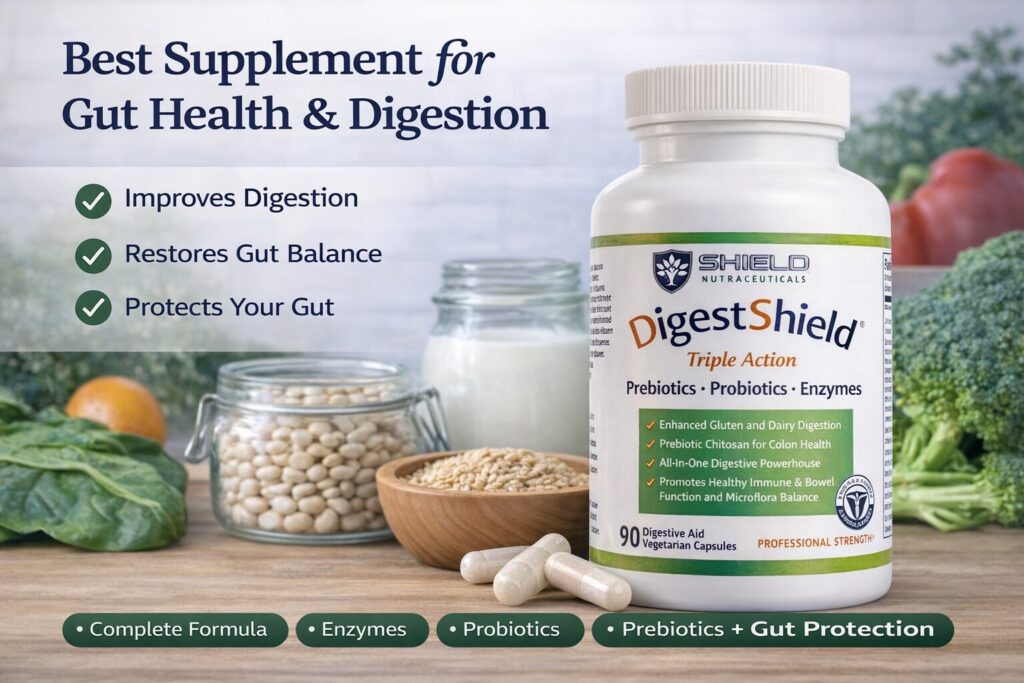
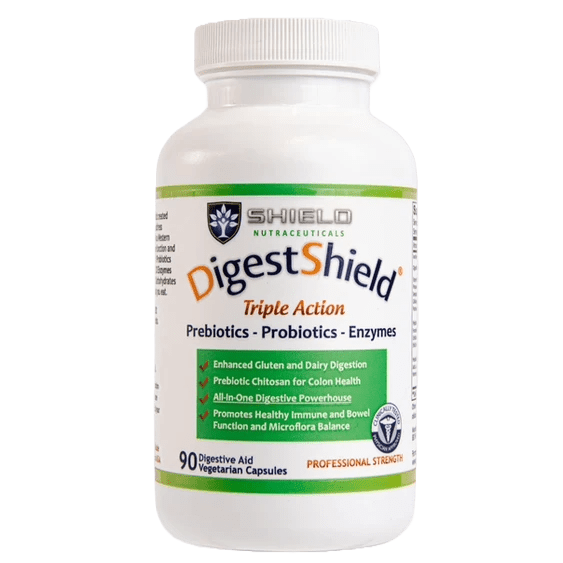
Best evidence for: Gut lining support and digestive comfort, particularly in combination with enzymes and probiotics. Mushroom-derived chitosan is the unique ingredient in DigestShield® and is researched in depth at chitosanglobal.com.
Distinguishing feature: Unlike most gut lining supplements that focus on cellular repair (glutamine) or mucosal barrier proteins (zinc carnosine), chitosan’s mechanism is physical and barrier-oriented, creating a complementary approach. It is the fourth pillar of a complete gut health protocol alongside enzymes, probiotics, and prebiotics.
| Supplement | Evidence Tier | Best For | When to Take | Time to Effect |
|---|---|---|---|---|
| Probióticos | Tier 1 ★★★★★ | Post-antibiotics, IBS, dysbiosis | Empty stomach AM or PM | 2–8 weeks |
| Prebiotic Fibre | Tier 1 ★★★★★ | Constipation, microbiome diversity | With meals daily | Days–4 weeks |
| Digestive Enzymes | Tier 1 ★★★★ | Bloating after meals, food intolerances | First bite of each meal | Immediate |
| L-Glutamine | Tier 1 ★★★★ | Leaky gut, post-infectious IBS-D | Between meals | 4–8 weeks |
| Peppermint Oil (EC) | Tier 1 ★★★★ | IBS cramping, bloating, pain | 30–60 min before meals | Days–weeks |
| Ginger Extract | Tier 2 ★★★ | Functional dyspepsia, nausea, fullness | With or before meals | 1–2 weeks |
| Curcumin | Tier 2 ★★★ | Gut inflammation, IBS, IBD | With fatty meals | 4–8 weeks |
| Zinc Carnosine | Tier 2 ★★★ | Leaky gut, mucosal damage, NSAIDs | With meals | 4–12 weeks |
| Butyrate | Tier 2 ★★★ | IBD, leaky gut, low-fibre diets | With meals | 4–8 weeks |
| Magnesium Glycinate | Tier 2 ★★★ | Constipation, low motility | Bedtime | 24–72 hours |
| Mushroom Chitosan | Tier 3 ★★ | Gut lining support, mucosal comfort | With meals | 4–6 weeks |
This is the most practically useful section for most readers mapping your primary symptom to the supplements with the strongest evidence for that specific presentation.
Start with: Digestive enzymes (broad-spectrum, with every meal) Add if needed: Probiotics (to address lower-gut fermentation overgrowth), peppermint oil (for cramping and spasm alongside bloating) Deeper reading: Why you feel bloated after eating
Start with: Probiotics (strain-matched: Bifidobacterium longum for IBS-C; LGG or S. boulardii for IBS-D) Add: Enteric-coated peppermint oil (for cramping and pain), soluble fibre (psyllium or PHGG gradually) If post-infectious: Add L-glutamine (5g three times daily per the BMJ RCT protocol) Avoid: High-FODMAP foods alongside these supplements; address FODMAPs first
Start with: Magnesium glycinate (200–400 mg at bedtime) + prebiotic fibre (psyllium husk, gradually) Add: Probiotics (Bifidobacterium longum specifically) Review: Hydration, physical activity, and stress constipation is frequently multifactorial
Start immediately with: Saccharomyces boulardii + Lactobacillus rhamnosus GG (take 2 hours after each antibiotic dose; continue 4–8 weeks after finishing) Add after antibiotic course: Prebiotic fibre (to feed recovered bacteria), fermented foods daily Deeper reading: Best supplement after antibiotics
Start with: L-glutamine (5g twice daily) + probiotics (butyrate-producing strains) + prebiotic fibre Add: Zinc carnosine, mushroom-derived chitosan Also address: Alcohol, NSAIDs, ultra-processed foods, chronic stress the root causes of gut permeability
Start with: Digestive enzymes (with every meal) + ginger extract (before meals) This pattern is distinct from IBS it points to upper GI motility rather than lower GI bacterial imbalance
Important: These are medical conditions requiring physician oversight. Supplements are adjunctive, not primary treatment. Evidence-supported adjuncts: Curcumin (with bioavailability enhancer), butyrate, probiotics (after medical management is established)
The most common mistake people make is starting multiple supplements simultaneously. When you cannot distinguish what is working, you cannot optimise your approach and if you experience side effects, you cannot identify the cause.
The recommended sequencing approach:
Week 1–2: Start one supplement the one most matched to your primary symptom. For most people, this is digestive enzymes (for meal-related bloating) or probiotics + prebiotic fibre (for general microbiome restoration).
Week 3–4: Assess. Has the primary symptom improved meaningfully? If yes, maintain this and consider adding a second supplement targeting a secondary symptom. If no improvement, reassess whether the supplement is correctly matched to your symptom and whether the dose is adequate.
Week 5–8: Add second supplement if needed. The strongest synergistic combinations are:
Supplements that are safe to combine: All 11 listed here can be combined safely. There are no significant known interactions between these supplements at standard doses.
The exception: Do not add butyrate if you have unresolved SIBO address the bacterial overgrowth first, then support the healed colon with butyrate.
| Time | Supplement | Why |
|---|---|---|
| Morning (empty stomach, 30 min before breakfast) | Probióticos | Lowest stomach acid; highest survival rate to colon |
| With breakfast / each meal | Digestive enzymes | Must be present simultaneously with food |
| With breakfast | Curcumin | Fat in meal improves absorption significantly |
| 30–60 min before meals | Peppermint oil (EC) | Needs to reach small intestine before food; never with food |
| With meals | Ginger extract | Supports gastric motility with food |
| With meals | Zinc carnosine | Mucosal protection most relevant peri-meal |
| Between meals or with water | L-glutamine | Gut cell fuel absorbed most efficiently away from food |
| With meals or between meals | Prebiotic fibre | Consistent daily intake; gradually increase |
| Bedtime | Magnesium glycinate | Supports overnight gut preparation; also aids sleep |
| With meals | Butyrate (EC) | Mucosal protection with food passing through |
| With meals | Mushroom chitosan | Mucosal interaction most relevant during digestion |
Honest assessment of what lacks evidence is itself an E-E-A-T signal it demonstrates that this guide prioritises accuracy over commercial interest.
“Detox” or “colon cleanse” products: The colon does not require external cleansing. The liver and kidneys handle metabolic waste elimination efficiently. Products marketed as “intestinal detox” or “colon cleanse” lack clinical evidence for meaningful gut health benefit and can disrupt gut motility and electrolyte balance with repeated use.
Colloidal silver: Promoted in some gut health communities as an antimicrobial. No credible clinical evidence for gut health benefit; potential to cause argyria (permanent skin discolouration) with regular use; FDA has stated that colloidal silver is not safe or effective for treating any condition.
Apple cider vinegar for gut health: Popular but poorly supported. Limited human evidence for the specific gut health claims made. May help with glycaemic response after meals in some individuals, but not a gut microbiome or gut lining intervention.
Generic, undifferentiated probiotics at very low CFU counts (under 1 billion CFU): Many budget probiotic supplements contain insufficient viable organisms to confer clinical benefit, and strain choice is often generic rather than matched to clinical evidence.
The strongest evidence in gut health research is not for any supplement it is for dietary patterns. A fermented-food-rich, high-fibre, plant-diverse diet consistently outperforms single supplements in microbiome diversity studies. Supplements work most effectively as targeted support on top of a gut-healthy dietary foundation, not as replacements for it.
The foundations that no supplement replaces:
The complete guide to improving gut health naturally provides the full dietary and lifestyle framework that supplements sit within.
With thousands of gut health products on the market, these criteria separate genuinely effective formulas from marketing-driven ones:
1. Strain specificity (probiotics): A quality probiotic names its strains (e.g., Lactobacillus rhamnosus GG, not just “Lactobacillus rhamnosus”) and provides CFU counts per strain, not just total CFU.
2. Enzyme breadth (digestive enzymes): A comprehensive enzyme formula includes amylase, protease, lipase, lactase, cellulase, and alpha-galactosidase not just the three most common. Look for activity units (HUT for protease, FCC for amylase) rather than just milligrams.
3. Prebiotic inclusion (probiotics): A probiotic formula that includes prebiotic compounds inulin, FOS, or other fibres alongside live bacteria significantly outperforms probiotic-only formulas for colonisation and durability of effect. This is the synbiotic principle.
4. Bioavailability enhancement (curcumin): Plain curcumin is poorly absorbed. Any curcumin product without a bioavailability-enhancing technology (piperine, phytosome, or nanoparticle) is unlikely to achieve clinical concentrations.
5. Enteric coating (peppermint oil, butyrate): For peppermint oil and butyrate, enteric-coated formulas are not optional they determine whether the active compound reaches the correct location in the digestive tract.
6. Third-party testing and cGMP manufacturing: Look for supplements manufactured in cGMP-certified facilities with third-party testing for purity, potency, and contaminant absence. These certifications indicate the labelled contents match the actual contents.
7. Transparent labelling: Avoid “proprietary blends” that obscure individual ingredient doses you cannot evaluate whether a supplement is dosed within the clinically studied range if the doses are hidden.
Most gut health supplements address one dimension probiotic, or enzyme, or prebiotic. DigestShield® was formulated to cover the three primary pillars of digestive function simultaneously, plus a fourth element that most supplement formulas overlook entirely.
Broad-Spectrum Digestive Enzyme Complex: DigestShield® contains amylase, protease, lipase, lactase, and cellulase addressing complete food breakdown across every macronutrient category. Taken with the first bite of each meal, it directly reduces the undigested fermentation substrate that drives post-meal bloating, gas, and lower-gut bacterial disruption. For a detailed comparison of what this addresses, see digestive enzymes vs probiotics.
Multi-Strain Probiotic with Prebiotic Support (Synbiotic Approach): DigestShield® combines clinically relevant probiotic strains with prebiotic compounds that sustain their colonisation and activity. The synbiotic formulation addresses the microbiome dimension of gut dysfunction the long-term environment that determines digestive efficiency, immune regulation, and gut lining integrity.
Mushroom-Derived Chitosan for Gut Lining Integrity: DigestShield®’s distinguishing fourth element is mushroom-derived chitosan a compound studied for its ability to support gut mucosal comfort and maintain the protective intestinal environment. This addresses the gut barrier dimension that enzyme-only and probiotic-only formulas miss entirely.
The combination addresses digestion efficiency, microbial balance, and gut lining integrity simultaneously which reflects what the clinical evidence shows produces the most durable improvement in digestive symptoms. All purchases are backed by a money-back guarantee.
For a broader comparison of what a complete gut health supplement should include, our best gut health supplement guide provides the full framework.
Supplements are appropriate for common digestive complaints in otherwise healthy adults. See a doctor if you experience:
These symptoms can indicate inflammatory bowel disease, exocrine pancreatic insufficiency, celiac disease, or gastrointestinal cancers all requiring proper medical diagnosis and management. No supplement is an appropriate substitute for medical care when these warning signs are present. This article is informational and does not constitute personalised medical advice.
There is no single “best” gut supplement the most effective supplement depends on your specific symptoms. Digestive enzymes work immediately for post-meal bloating; probiotics work over weeks for microbiome restoration; prebiotic fibre supports both constipation and microbiome diversity; L-glutamine addresses gut lining repair. For most people, a combination of enzymes, probiotics, and prebiotic fibre ideally in a single synbiotic formula covers the most ground.
Yes, for specific supplements used for specific conditions. Probiotics have strong RCT evidence for post-antibiotic recovery and some IBS presentations. Digestive enzymes have strong evidence for meal-related bloating and food intolerances. Prebiotic fibre has strong evidence for constipation. L-glutamine has RCT evidence for post-infectious IBS-D. The key is matching the supplement to the symptom rather than taking a generic “gut health” formula and hoping for broad improvement.
It varies significantly by supplement category: digestive enzymes work within the same meal; peppermint oil for IBS cramps can show effect within days; magnesium glycinate improves constipation within 24 to 72 hours; probiotics and prebiotic fibre typically require 2 to 8 weeks for noticeable microbiome changes; L-glutamine for gut lining repair typically takes 4 to 8 weeks.
Yes. Most gut health supplements work in different parts of the digestive tract through different mechanisms and are safe to combine. The most effective combinations are: probiotics + prebiotics (synbiotic stack), digestive enzymes + probiotics (upper and lower GI support), and L-glutamine + zinc carnosine (gut lining repair). Start one at a time to identify what works before stacking.
They have the most clinical research behind them, but “most important” depends on your situation. For someone with post-antibiotic gut disruption, yes probiotics are the priority. For someone whose primary problem is post-meal bloating from enzyme deficiency, digestive enzymes will have more immediate impact. For someone with confirmed leaky gut, L-glutamine and gut barrier support are the priority. The most important supplement is the one correctly matched to your specific condition.
The evidence-backed combination for gut lining repair is: L-glutamine (primary fuel for intestinal cells), zinc carnosine (mucosal protection and tight junction support), butyrate (colonocyte fuel and anti-inflammatory), and probiotics with butyrate-producing strains (Bifidobacterium and Faecalibacterium prausnitzii). Addressing the causes of gut permeability simultaneously — alcohol reduction, NSAID minimisation, stress management, and removing ultra-processed foods is equally important.
The evidence-ranked approach for IBS: (1) probiotics with strain-matched selection for your IBS subtype; (2) enteric-coated peppermint oil for cramping and pain; (3) soluble fibre (psyllium or PHGG, introduced gradually) for motility regulation; (4) L-glutamine if post-infectious presentation; (5) curcumin for inflammation-dominant presentations. Note that FODMAPs are often more responsible for IBS symptoms than the gut bacteria alone dietary management alongside supplementation produces better outcomes than supplementation alone.
They address different parts of your digestive system. Digestive enzymes work in the upper GI tract during meals. Probiotics work in the lower GI tract over time. Many people benefit from both simultaneously because they target different mechanisms of digestive dysfunction. If you take probiotics but still experience significant post-meal bloating, adding digestive enzymes is a logical next step.
Complete Guides
Supplement Deep-Dives
Symptoms and Conditions

Etiam magna arcu, ullamcorper ut pulvinar et, ornare sit amet ligula. Aliquam vitae bibendum lorem. Cras id dui lectus.
63739 street lorem ipsum City, Country
+12 (0) 345 678 9
info@company.com
Take the first step towards a happier gut. Get 5% de descuento your next purchase of DigestShield.